News
LIFT (Sweden): Actors from across the value chain are coming together to find new ways to finance agriculture's climate transition.
Actors from across the value chain are coming together to find new ways to finance agriculture's climate transition. Through collaboration between farmers, companies and the financial sector, more climate action will be possible.
In the fall of 2025, Kristianstad Municipality launched “Gården i centrum” (“The farm at the centre”), where actors from the entire value chain come together to find new ways to finance agriculture’s climate transition.
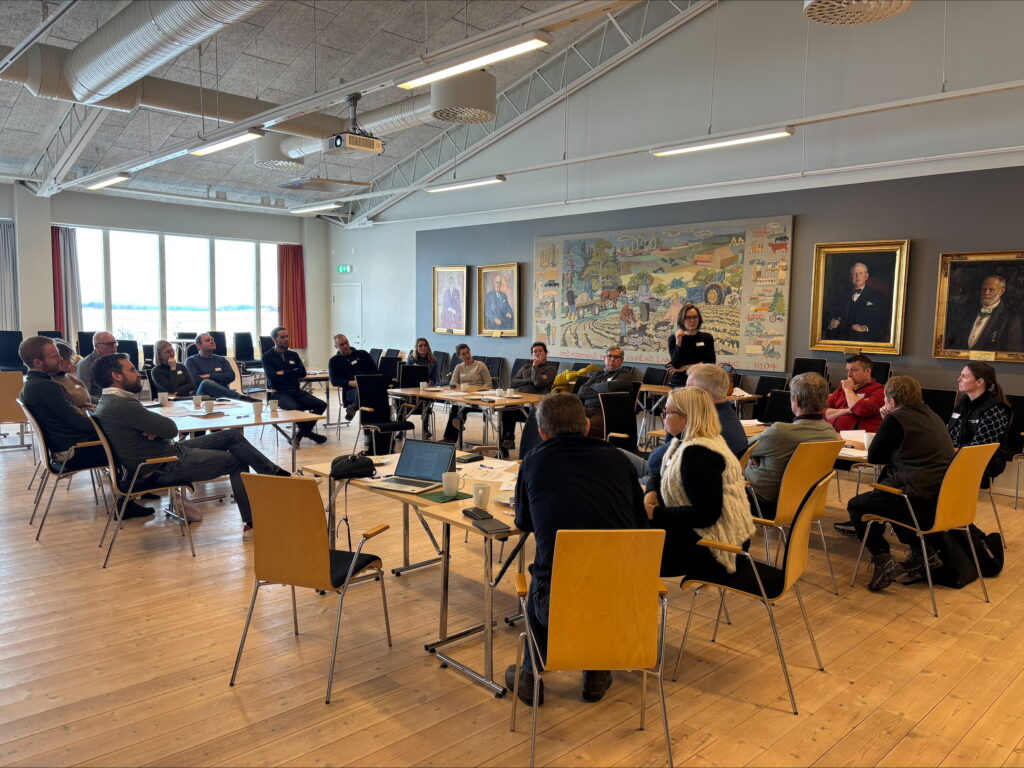
On February 9, farmers, food companies and representatives from the financial sector met at the Hushållningssällskapet in Skepparslöv to discuss the conclusions and proposals that the work has led to. The municipality and Svensk Kolinlagringer also participated.
The meeting resulted in several key conclusions:
- All actors are demanding a forum for continued discussion about the agricultural transition work.
- More money is needed in the system. Farmers currently bear too much of the financial responsibility and major climate investments are still considered risky.
- A local Nature Fund in the Kristianstad region can strengthen the financing of more nature and climate measures.
- Short leases reduce incentives for long-term climate action, so the municipality’s lease agreement should continue to be developed
“To move forward, we must continue to gather in a forum with cutting-edge and focus on financing issues. The municipality is taking on the task of establishing and running this forum. We need local activities that strengthen agriculture in the countryside and enable new money to enter the system,” says Linnéa Skoogh, sustainability manager at Kristianstad Municipality.
The article was published on March 20, 2026
Source: https://www.kristianstad.se
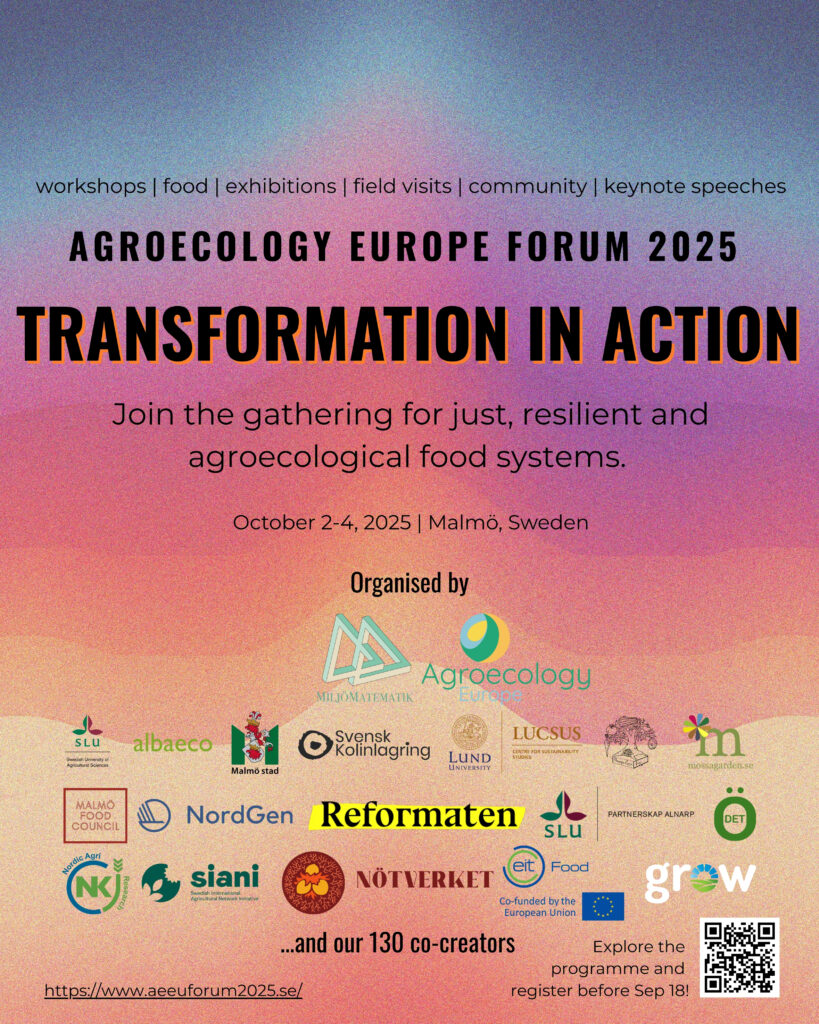
LIFT participates and hosts workshops at AEEF 2025 in Malmö
LIFT participated in the Agroecology Europe Forum 2025 in Malmö, where researchers, practitioners, policymakers and food system actors gathered to explore pathways for agroecological transformation.
The forum was organised by MiljöMatematik Malmö AB, one of the partners in the LIFT consortium. As part of the programme, LIFT contributed to several sessions and hosted more than one workshop connected to Living Labs, action research and agroecological food system transformation.
One of the LIFT sessions, “Envisioning the Ideal Agroecology Living Lab”, was coordinated by Geir Lieblein, Tor Arvid Breland and Anna Marie Nicolaysen from the Norwegian University of Life Sciences. The workshop focused on Living Labs as tools for food system sustainability, using visionary thinking and participatory reflection to explore what an ideal agroecology Living Lab could become.
LIFT also presented its broader approach to Living Labs for agroecological food systems. The project highlighted how targeted public procurement for public canteens can act as a catalyst for agroecological change in food systems and landscapes, and how Living Labs can support collaboration between farmers, public authorities, canteen staff, researchers and other food system actors.
The programme also included a wide range of sessions connected to agroecological Living Labs, food systems transformation, public procurement, collaborative governance and alternative approaches to sustainability and regional development.
Together, these contributions reflected LIFT’s core focus: developing and testing Living Lab approaches that support agroecological transformation across farms, landscapes and regional food systems.
The forum created an important space for exchange between European agroecology initiatives and strengthened LIFT’s role in connecting research, practice and policy for more sustainable food systems.
The article was published on October 6, 2025
Source: https://www.aeeuforum2025.se/
LIFT: New EU project unites five countries in Living Labs network for agroecological transformation of food systems through public procurement
OSLO, May 9, 2025 – At a time when food systems contribute to both climate change and environmental degradation, the LIFT project launches today, an innovative research collaboration that will use public procurement as leverage for agroecological transformation of agricultural landscapes in Europe. Co-funded by the European Union and national/regional funding bodies participating in the Agroecology Partnership, the project receives €1.5 million in funding from the EU's Horizon Europe program and will establish Living Labs in five European countries.
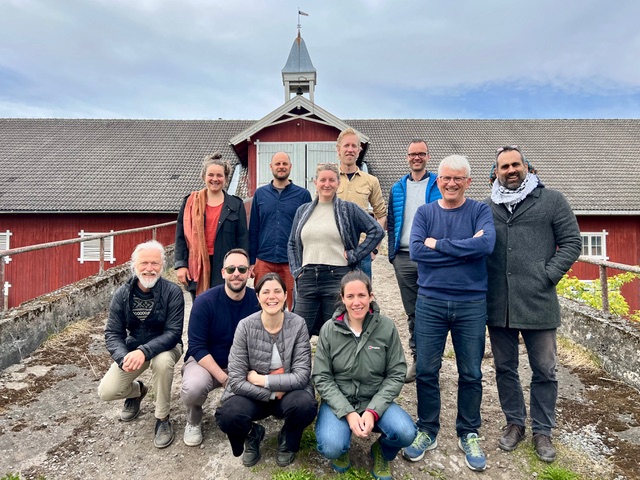
The project consortium met for the first time on May 7-9 at Fokhol Farm in Stange, Norway, a place that itself practices according to agroecological principles through its biodynamic farming and regional direct sales.
“Today’s food systems are one of the main drivers of climate change and environmental degradation, while also creating challenges for the economic and social viability of farming communities,” says project coordinator Professor Tor Arvid Breland from the Norwegian University of Life Sciences (NMBU). “Although agroecological principles have known potential to address these shortcomings, they are insufficiently implemented. The LIFT project tackles this challenge in a new way by taking a food systems approach and focusing on public procurement from farms where compliance with the ecological principles and processes we all ultimately depend on, is emphasised.”
In Spain, the team from the Institute of Sociology and Peasant Studies (ISEC) at the University of Córdoba is connected, through the GIASAT consortium (giasat.org), with HortaCuina (hortacuina.org), a collaborative initiative bringing together around 20 agroecological producers from the Valencian agricultural region. These producers supply directly to more than 45 school canteens and provide over 13,000 meals (as well as deliveries to individual families) across the region. “The challenge we recognize is how to learn from these processes to consolidate and expand these territorial dynamics that allow for the viability of agroecological producers and the general normalization of these types of menus in schools and families.” says Professor David Gallar from the University of Córdoba.
In the Swedish Living lab a team from Halmstad Högskola, Svensk Kolinlagring and MiljöMatematik are collaborating and bringing together different municipal actors of the local food system. “Sweden is a country with many regional food traditions, yet most of our food travels long distances from source to consumption. Through establishing agroecological supply chains for public canteens, we aim to set ways for more regional and sustainable food production with all its benefits for the people, profitability and our environment.”, explains Dr. Michael Löbmann from Svensk Kolinlagring.
“Public procurement is a practical tool that’s often overlooked when we talk about changing our food systems. In LIFT, we want to highlight stories and lessons that show how food purchases in schools, hospitals, and other public kitchens can support healthier soils, stronger local communities, and better food on people’s plates.”, explains Jessica Johansson from Miljömatematik Malmö AB. “Halmstad University will be involved in research to identify the main barriers in using food procurement for transforming the food system and to find ways to overcome them.” adds Prof Martin Melin.
Reflecting on the initiative’s goals and recent activities, Professor Sara Magalhães from the Centre for Ecology, Evolution and Environmental Changes at the University of Lisbon in Portugal says, “In Portugal, we launched the Agroecological Caravan to strengthen links among consumers, producers, and policy makers. With LIFT, we will leverage our network to explore how public procurement can boost local, seasonal, and sustainable food production and consumption. We look forward to collaborating with key stakeholders to support this transformation, from farm to fork.”
What are Living Labs?
The LIFT project uses a transdisciplinary and participatory approach through so-called Living Labs. These function as real-world experimental environments where various actors – farmers, advisors, public procurers, consumers, and decision-makers – collaborate to develop place-based solutions.
Each Living Lab follows a structured process where participants map the current situation, create visions for the future, identify supporting and hindering factors, develop action plans, and evaluate results in iterative cycles.
“Since approximately half of all food in Europe is served in public institutions such as schools and hospitals, there is an enormous leverage point for change,” explains Breland. “The basic assumption that ‘eating is an agricultural act’, as Wendell Berry put it, means that our food choices strongly influence the environmental footprint of the food system. By reconnecting consumers to the landscapes where their food is produced, and using public procurement as a catalyst, we can unlock the potential of agroecological transformation.”
“A crucial aspect of LIFT is that we will investigate to what extent changes in public procurement practices can support the urgently needed shifts in our food and farming systems. Six Living Labs across five countries will co-develop a framework to monitor and evaluate progress in agroecological transformation at the landscape level – one that is sensitive to diverse local contexts while enabling robust cross-site comparisons.” says Dr. Nina Isabella Moeller from the University of Southern Denmark.
Three principal objectives
The project has the following three main objectives:
- Facilitate multi-stakeholder Living Labs
Bring together actors from the entire food chain to develop agroecologically sound production, delivery, procurement, and consumption of food in regional landscapes and connect these in an international network of Living Labs - Identify drivers and barriers
Explore factors that support or hinder the transition to more collaborative, regional, and agroecologically sound food systems, and to develop concepts and tools for improving such a transition. - Develop a participatory framework
Develop a framework to evaluate the impact of the Living Labs activities on the implementation of agroecological principles and practices as well as on the ecological, economic, and social sustainability of farms, landscapes and the food system.
The project builds on Living Labs in southwestern (Portugal, Spain) and northern (Sweden, Denmark, Norway) Europe, enabling learning between regions with different conditions.
“To strengthen the sustainability of food systems, we need a shift from decoupling and competition between actors in the value-chain to increased proximity and collaboration,” adds Breland. “This is a complex challenge, a ‘wicked problem’, where different perspectives must meet and find common paths forward.”
The tools and solutions developed will be disseminated through “lighthouse cases”, successful examples of agroecological transformation, and via the learning platform developed within the Agroecology for Europe project.
Partners
The LIFT project, running from May 2025 to April 2028, is coordinated by the Norwegian University of Life Sciences (NMBU) and involves partners from:
- University of Lisbon – Association for Research and Development of Sciences (Portugal)
- Svensk Kolinlagring (Sweden)
- University of Córdoba (Spain)
- University of Southern Denmark (Denmark)
- Miljömatematik Malmö AB (Sweden) – responsible for communication and knowledge dissemination
- Halmstad University (Sweden)
- University of Extremadura (Spain)
For more information:
Professor Tor Arvid Breland
Project Coordinator, LIFT
Norwegian University of Life Sciences
Email: tor.arvid.breland@nmbu.no
Tel: +47 95 86 87 46
Jessica Johansson,
Miljömatematik Malmö AB
Email: jessica.johansson@miljomatematik.se
Tel: +46 70 834 21 02
The article was published on May 9, 2025
Summary presentation of LIFT: https://www.agroecologypartnership.eu/lift