The Swedish Living Lab
The Swedish Living Lab is situated in Kristianstad (Scania) southern Sweden within the UNESCO Biosphere Reserve Kristianstads Vattenrike, designated in 2005 as an international model area for sustainable development. The biosphere reserve covers the Helge River catchment area within Kristianstad municipality and represents a landscape where wetlands, forests, grasslands, agricultural land and urban environments coexist within one of Sweden’s most agriculture-intensive regions.
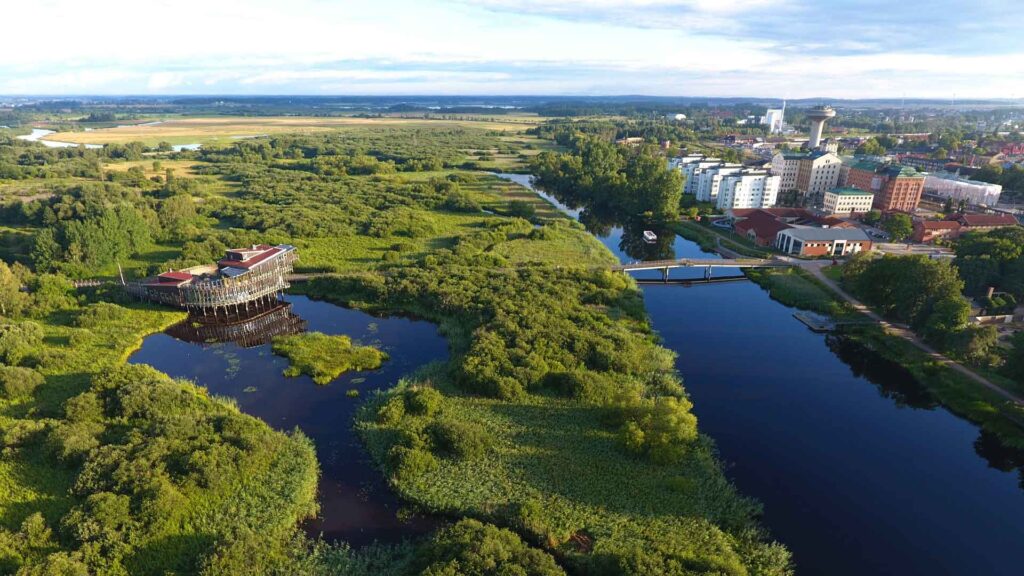
Kristianstad has a long agricultural history and a strong connection between landscape, food production and local livelihoods. Approximately 44 percent of the municipality’s land area consists of agricultural land, while agriculture and forestry remain important for regional employment, food production and landscape management. Semi-natural grasslands and pastures with long management traditions continue to support valuable biodiversity and ecological functions.
The Kristianstad Living Lab builds on several years of municipal work on food systems transformation, including initiatives connected to climate-neutral development, carbon sequestration and systems-based planning approaches. The Living Lab serves as a place-based arena for collaboration, experimentation and systems learning around agroecological transition.
The Living Lab is developed in collaboration with Kristianstad Municipality and is coordinated by partners from Halmstad University, Svensk Kolinlagring and MiljöMatematik Malmö AB. Together, the partners bring together actors from across the local food system, including municipal departments, schools, farmers, food companies, researchers, financial actors and civil society organisations.
A central focus of the Living Lab is the role of public meals and procurement as leverage points for transformation. The work explores how procurement practices, school meal environments, pedagogy and local production pathways can be aligned with agroecological principles and regional food system resilience.
The Living Lab also contributes to strengthening cross-departmental collaboration within the municipality and developing a shared systems understanding among local stakeholders. Existing systems mapping tools and participatory methods are further refined through the Living Lab process, together with the development of a shared vision, milestones towards 2028 and a long-term roadmap for transformation.
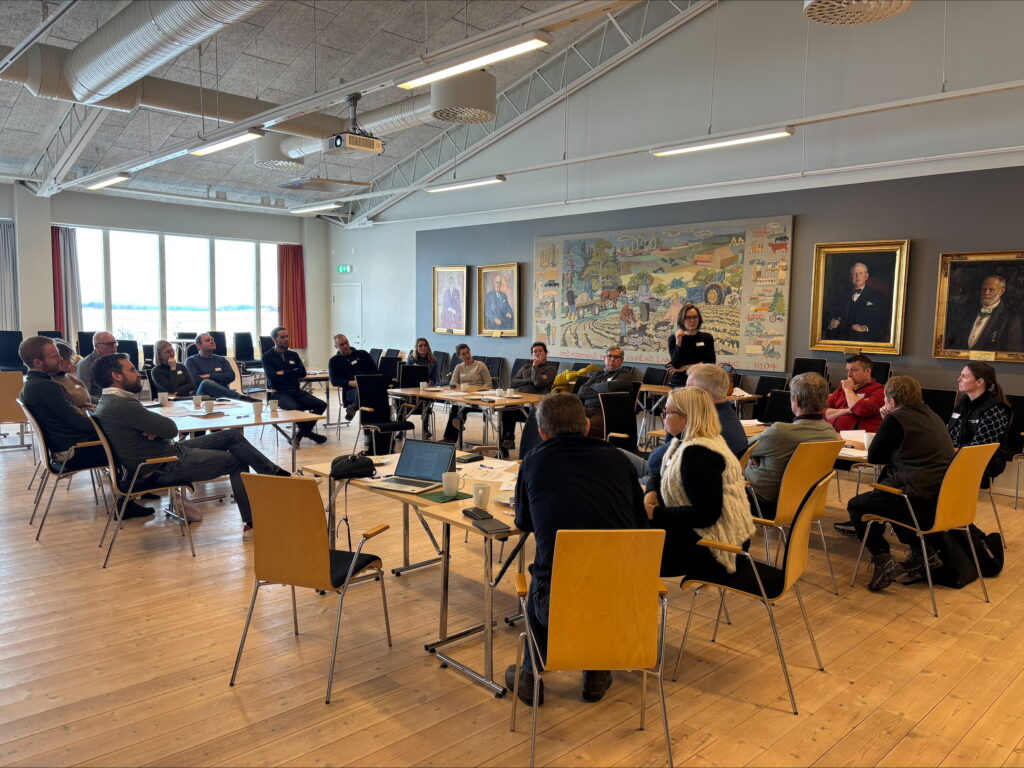
An important emerging focus of the Living Lab is preparedness and regional food resilience. Current work explores how public procurement of legumes can support preparedness strategies while contributing to soil health, reduced nitrogen dependency, climate adaptation and more diversified farming systems. Multi-actor workshops and dialogue processes have brought together farmers, food companies, banks, insurance actors and municipal representatives to identify opportunities and barriers connected to regional agroecological transition.
The Kristianstad Living Lab explores how regional and agroecological food systems can support healthier environments, stronger local economies and more resilient communities. Through participatory governance, systems thinking and real-world experimentation, the Living Lab contributes to the development of practical pathways for sustainable food systems transformation in southern Sweden.